How to Unclog a Drain Without a Plumber (5 Methods That Work)
On this page
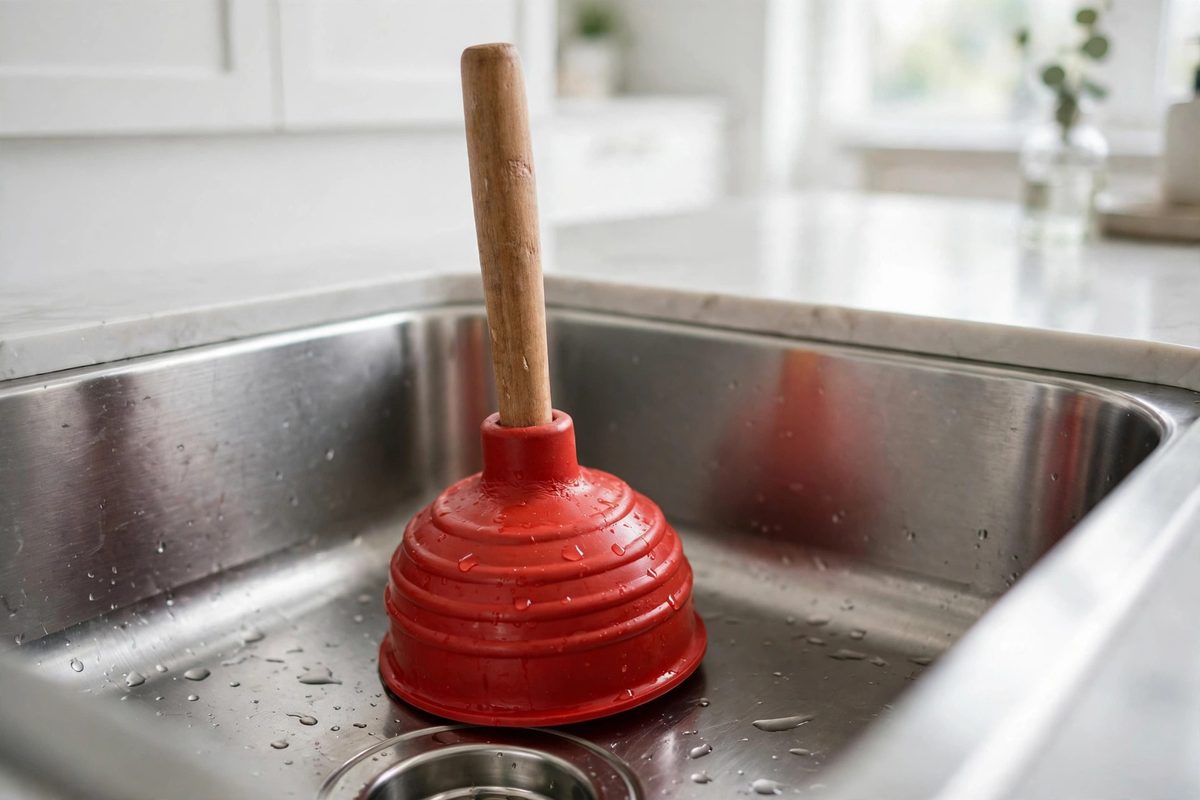
A slow drain rarely announces itself. One day the water takes a second longer to disappear. A week later you are standing in an inch of grey water, wondering when it got this bad. The fix is usually fifteen minutes and no plumber. Try these in the order we would actually try them — most clogs give up by the second one.
Safety first: wear rubber gloves. Never mix chemical drain cleaners — mixing bleach-based and acid-based products can release dangerous gas. And never use a chemical cleaner and then plunge: the plunger can splash the chemical back at you. If you have already poured a chemical cleaner in, stop here and call a plumber.
1. The plunger — done properly
This is the one most people do wrong. Use a cup plunger (the simple rubber cup on a stick) for sinks, not a flange plunger — that one is for toilets.
- Remove the sink stopper or strainer so the plunger can seal directly over the drain.
- Block the overflow hole with a wet cloth. Without this, the pressure escapes through the overflow and the plunge does nothing.
- Run enough water to cover the plunger cup by about 2 cm.
- Push down firmly, then pull up sharply, about 15 to 20 times. Keep the seal — short, fast strokes work better than slow ones.
- Lift the plunger. If the water drains, run the hot tap for a minute to flush the line.
2. Pull the hair out
If the drain is still slow, the blockage is probably a mat of hair and soap just below the surface. This is the number one cause of slow bathroom drains.
A plastic drain snake (sold as a "zip-it" or drain stick) costs a few dollars and is the right tool. Push it gently into the drain, twist it a few times, and pull it out slowly — the barbs catch the hair. Repeat two or three times. You can also unscrew the stopper and reach in with needle-nose pliers. Unpleasant. Effective.
3. Baking soda and hot water — for grease and smells
Pour half a cup of baking soda down the drain, followed by a kettle of hot (not boiling) water. Wait ten minutes, then flush with more hot water. This helps with grease build-up and bad smells.
Be honest about its limits, though: baking soda will not dissolve a solid blockage of hair or food. The popular baking soda plus vinegar trick looks impressive because it fizzes, but the fizz is mostly theatre — the mixture quickly becomes salty water. For a real clog, use methods one, two or four instead.
4. The wet/dry vacuum trick
If you own a wet/dry shop vacuum, it can pull a clog out from above. Set it to vacuum liquids, hold the hose tightly against the drain (wrap a rag around it to seal the gap), and switch it on for 10 to 15 seconds. The suction often pulls the blockage straight out. Empty the vacuum, check what came out, and test the drain.
5. Clean the P-trap
The P-trap is the U-shaped pipe under the sink. It holds water to block sewer smells, and it is also where debris collects.
- Put a bucket under the trap and keep towels nearby.
- Unscrew the slip nuts by hand (or gently with pliers). Water will spill into the bucket — that is normal.
- Empty the trap into the bucket, clean it out, and check the pipe ends for blockages.
- Reassemble, hand-tighten the nuts, run the tap and check for leaks. Tighten a quarter turn more if it drips.
Take a photo before you take it apart, so you know exactly how it goes back together.
When to call a plumber
Stop and call a professional if more than one drain is slow at the same time, if water backs up into another fixture (for example, the bath fills when the sink drains), if you smell sewage, or if water is coming up through a floor drain. Those point to a blockage in the main line, which needs professional equipment.
Start with the plunger, then pull the hair out, then the trap. That order clears almost every household clog we have ever dealt with — and a two-dollar strainer in the drain is the cheapest plumbing you will ever buy.
Comments
No comments yet — be the first to share your experience.