How to Repressurise a Boiler That's Lost Pressure
On this page
How to Repressurise a Boiler That’s Lost Pressure
Check the pressure gauge first
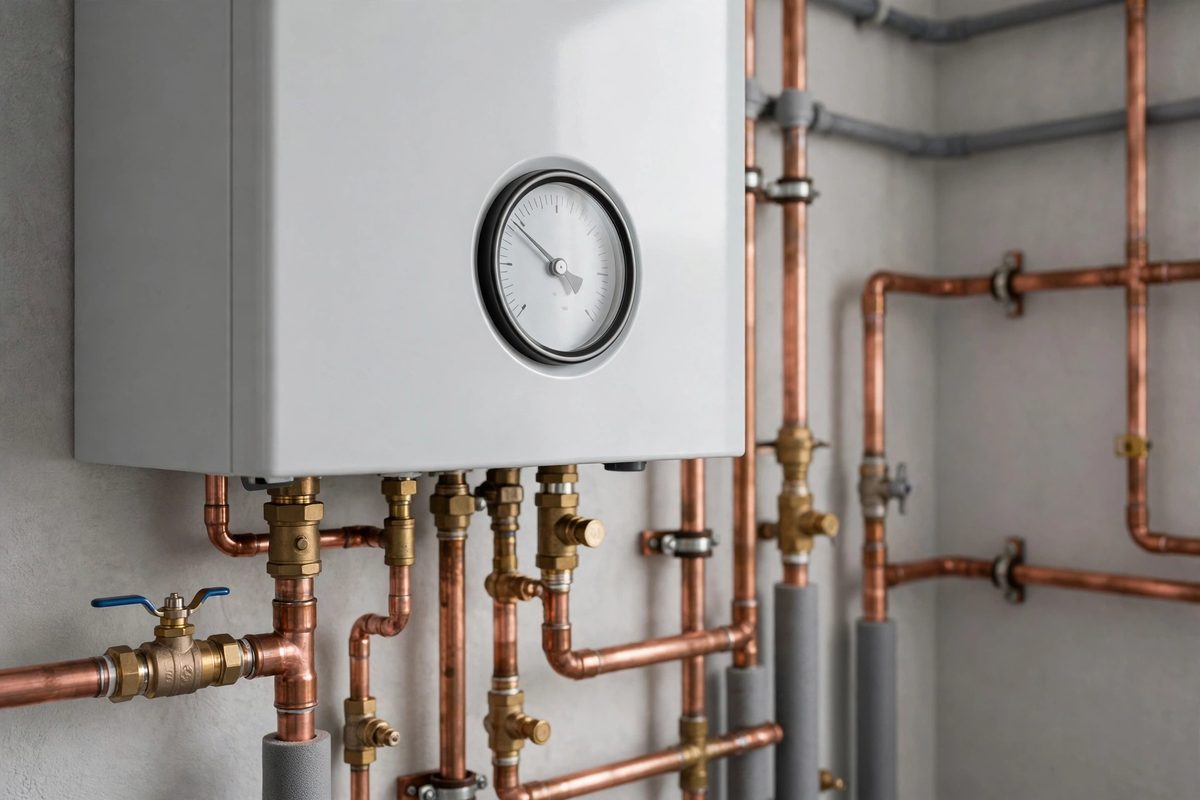
Before you start fiddling with valves, glance at the pressure gauge on the front of the boiler. When the system is cold, most modern boilers like Worcester Bosch, Vaillant or Ideal should sit somewhere between 1 and 1.5 bar. If the needle is below 1 bar, the heating won’t kick on and you’ll probably see the “low pressure” warning flashing.
It’s worth noting that the gauge can jump a bit when the water is hot, so always read it after the boiler has cooled for a few minutes. A quick visual check tells you whether you actually need to add water or if the problem lies elsewhere.
Locate the filling loop or filling key
Every domestic boiler has a way to add water from the mains. Most of the time it’s a flexible metal hose – the filling loop – that sits behind a small panel on the side of the unit. In older models you might see a brass “filling key” that you turn with a wrench.
Here’s how to spot them:
- Turn off the boiler and let it cool.
- Remove the decorative cover (usually clipped or screwed on).
- Look for a short hose with two valves (red and blue) or a single brass knob.
If you can’t find the loop, the user manual will have a diagram, and a quick online search for your boiler’s model name will usually pull up a picture.
Top up the system
Now that you’ve found the entry point, it’s time to add water. The exact steps vary a bit between brands, but the core idea is the same: open the valves, watch the gauge climb, then close everything before it overshoots.
- Turn the boiler back on. You need a little pressure in the system for the pump to move water into the loop.
- Open both valves on the filling loop. If you have a filling key, turn it slowly clockwise until you hear water flowing.
- Watch the pressure gauge. As water fills the system, the needle will rise. Aim for about 1.2 bar when the boiler is cold. If it goes above 1.5 bar, close the valves right away – you can always add more later, but you can’t take water out without a bleed.
- Close the valves. Turn each valve the opposite way you opened it, or turn the filling key anticlockwise until it stops.
- Remove the cover. Snap it back into place and make sure it’s secure.
Give the boiler a minute or two, then press the reset button if it has one. Most units will fire up automatically once the pressure is in the correct range, but a quick reset helps the electronics recognise the new conditions.
Resetting the boiler
Many modern boilers have a small reset or “restart” button near the control panel. Press it once – you’ll often hear a click and the display will flash “resetting”. If the pressure is now within the safe zone, the boiler should go through its start‑up sequence and the heating will come back on.
If the boiler refuses to restart, double‑check the gauge. Sometimes the water settles and the pressure drops a fraction after you close the loop. A quick re‑check and another brief opening of the valves can fine‑tune the reading.
When repeated pressure drops mean a leak
Adding water once or twice and seeing the gauge stay steady is normal. But if you find yourself topping up every few days, something’s leaking.
Common culprits include:
- Loose pipework around the boiler or the filling loop.
- A faulty pressure‑relief valve (the little brass disc that releases steam when pressure spikes).
- Radiator bleed valves that haven’t been closed properly.
- Hidden leaks in the pipework hidden behind walls or under the floor.
In these cases, the safest move is to call a qualified heating engineer. They have the tools to pressure‑test the system, locate hidden leaks and replace worn components. Trying to chase a leak yourself can lead to more water damage or even a dangerous drop in pressure while the boiler is running.
Quick checklist before you call for help
- Is the gauge consistently below 1 bar after a few hours?
- Do you hear any drips or see damp patches near the boiler?
- Has the boiler shown any error codes related to pressure?
- Did you notice a sudden drop after bleeding a radiator?
If you answered “yes” to more than one of those, it’s time to schedule a visit. Most engineers will arrive with a pressure gauge, a leak detection kit and a replacement valve if needed.
Wrap‑up
Knowing how to repressurise a boiler isn’t rocket science, but it does save you from a cold house and a flashing warning light. Keep an eye on that gauge, use the filling loop carefully, and reset the unit once the pressure is right. If the needle keeps slipping, treat it as a sign that something’s leaking and get a professional in.
With a little routine maintenance, your boiler will stay in the sweet spot of 1‑1.5 bar, and you’ll spend more time enjoying a warm living room than hunting for a missing valve.
Comments
No comments yet — be the first to share your experience.